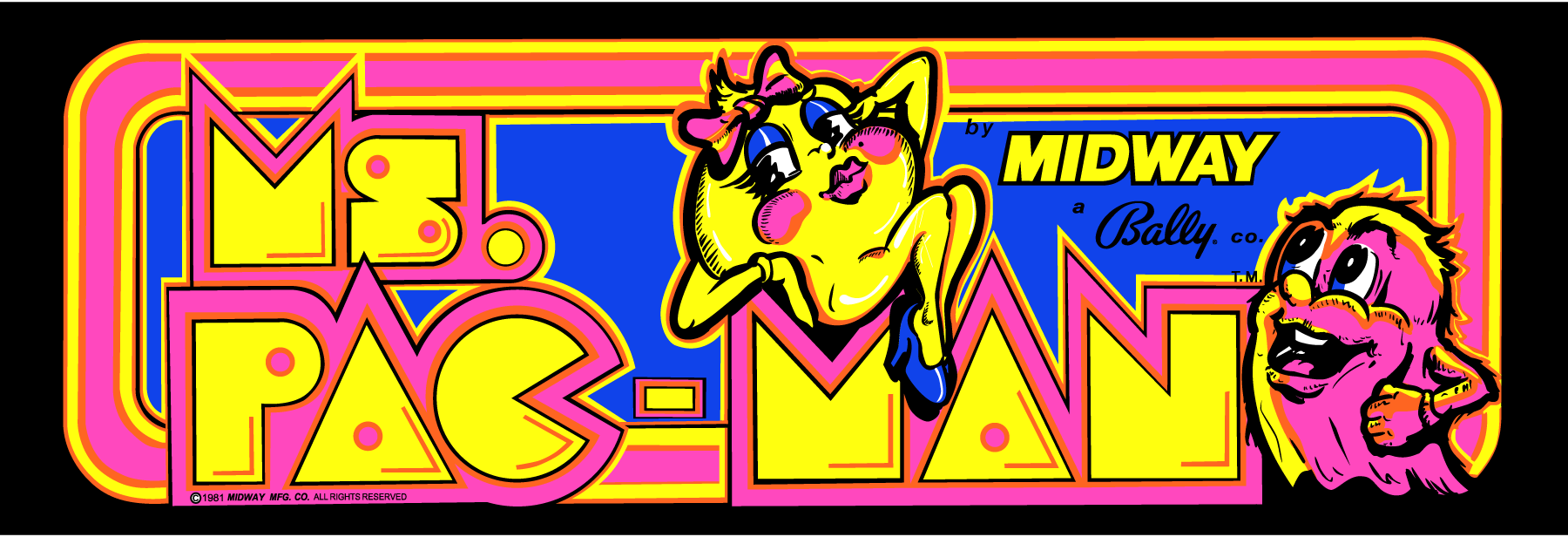
In the golden age of the arcade, few characters captured the imagination of players quite like Ms. Pac-Man. Sporting a red bow, a beauty mark, and a pair of red lips, she was instantly recognizable — and instantly beloved. But the story of how she came to exist is one of the most fascinating, improbable, and downright rebellious tales in video game history.
Ms. Pac-Man is a 1982 maze video game developed by General Computer Corporation and published by Midway Manufacturing for arcades. It is a sequel to Pac-Man, and the first entry in the series not to be made by Namco. What began as an unauthorized hack became one of the most celebrated games ever made.
From MIT Dropouts to Arcade Royalty
Despite its dramatic success, few people know that this arcade classic was not developed by Japanese firm Namco, the company behind Pac-Man. In fact, a small group of MIT dropouts from New England created the game. In an astounding feat of business acumen and teamwork, they sold Midway on the concept and quickly pushed the game into record-breaking reality.
General Computer Corporation made the game as a modification kit for the original Pac-Man, titled Crazy Otto. However, due to previous legal action with Atari, Inc., GCC was forced to present the project to Midway Manufacturing, the North American distributor of Pac-Man. Midway purchased the project and enlisted GCC to use the game as a basis for the sequel to Pac-Man.
It was an unorthodox path to creation — but the result would outshine even its legendary predecessor.
The Name That Almost Wasn’t
Choosing what to call the new character proved surprisingly tricky. Multiple names were considered for the game, including Miss Pac-Man and Mrs. Pac-Man. The lead character was made female and the game was renamed Pac-Woman. That name was dropped in favor of Miss Pac-Man, but the developers then realized that, given the third intermission showing a stork delivering a baby to Pac-Man and the player’s character, confusion could arise about their relationship. In light of this, the name was changed to Mrs. Pac-Man, and then finally to Ms. Pac-Man, which rolled off the tongue more easily.
As programmer Steve Golson recalled, “In the span of just two weeks, it went from Crazy Otto to Super Pac-Man to Miss Pac-Man.” These later changes — Miss, Mrs., and Ms. — all occurred within 72 hours of actual production.
Shortly before release, a Midway representative stated that Ms. Pac-Man was conceived in part as a response to the original Pac-Man being “the first commercial videogame to involve large numbers of women as players,” and it was “our way of thanking all those lady arcaders who have played and enjoyed Pac-Man.”
What Made the Gameplay Special
While Ms. Pac-Man built on the foundation of the original, she brought meaningful improvements that players immediately noticed and loved.
For the first time in video-game history, the game’s lead character was female. Ms. Pac-Man is almost identical to the original character with two main differences — she wears a bow in her “hair” and is also wearing lipstick. Another change from the original is that the bonus fruit items are no longer static but now move randomly around the mazes.
The game has four different mazes that change once every two to four screens instead of just one maze throughout the entire game. This variety kept players on their toes and gave the game a depth that felt genuinely new rather than just a reskin.
The game also featured charming story intermissions. Ms. Pac-Man’s intermissions tell the story of how Pac-Man and Ms. Pac-Man met, fell in love, and had a baby — a surprisingly sweet narrative thread woven between the frantic ghost-dodging action.
A Record-Breaking Hit
Ms. Pac-Man released toward the end of 1981 and eventually went on to sell over 119,000 units, making it the most popular arcade game in history.
Ms. Pac-Man was acclaimed by critics for its improvements to the original gameplay and for having a female protagonist. Some have described it as superior to Pac-Man. It has been listed among the greatest video games of all time and as one of the most successful American arcade games ever made.
In 1996, Next Generation magazine ranked the arcade version among its top games of all time, noting that it had aged far better than the original Pac-Man due to its smarter ghost AI, varied mazes, and moving fruits. They summed it up simply: “It has the broadest appeal of any game Next Generation has seen, with the possible exception of Tetris. Women love it. Men love it. Children love it.”
A Pioneer for Women in Gaming
Ms. Pac-Man’s significance went far beyond the arcade cabinet. Ms. Pac-Man is one of the most recognized arcade games in video game history — not only because it was one of the first games to have a female character as the main protagonist, but also because it proved that video games could go mainstream.
Ms. Pac-Man’s influence extends beyond gaming, serving as a symbol of empowerment and representation for women in the gaming industry. At a time when nearly every arcade game starred a male hero or featured women only as damsels in distress, Ms. Pac-Man stood out as something genuinely different — a female lead who was the star of her own adventure, not a supporting character in someone else’s.
A Legacy That Endures
After debuting publicly on February 3, 1982, in its original form as an arcade game from Bally Midway, versions have since appeared on at least 28 different game and computer platforms.
Ms. Pac-Man remains one of the most widely distributed arcade cabinets across the United States. Her image has become so recognizable that she has appeared on T-shirts, cartoons, and lunch boxes. Her gameplay remains so enthralling that she can now be found everywhere from internet web portals and game consoles to cell phones.
Even today, Ms. Pac-Man remains a beloved icon of arcade gaming, with its timeless gameplay and endearing charm continuing to captivate players of all generations.
She was never supposed to exist. She was born from a legal dispute, a university dropout’s garage project, and a two-week naming scramble. But Ms. Pac-Man did more than survive — she thrived, she pioneered, and she left a mark on gaming culture that more than forty years later shows absolutely no sign of fading.